Canada Express Entry Predictions Late 2026: Draw Frequency, CRS Scores & Category Trends
Quick Navigation:
I. Express Entry Trends Overview for H2 2026
Based on publicly available IRCC internal planning and past draw results, the timing, scale, and category arrangements of Express Entry invitation rounds typically align closely with initial plans. This is especially true for category-based draws such as French language proficiency, healthcare, education, and trades, which show relatively stable execution.
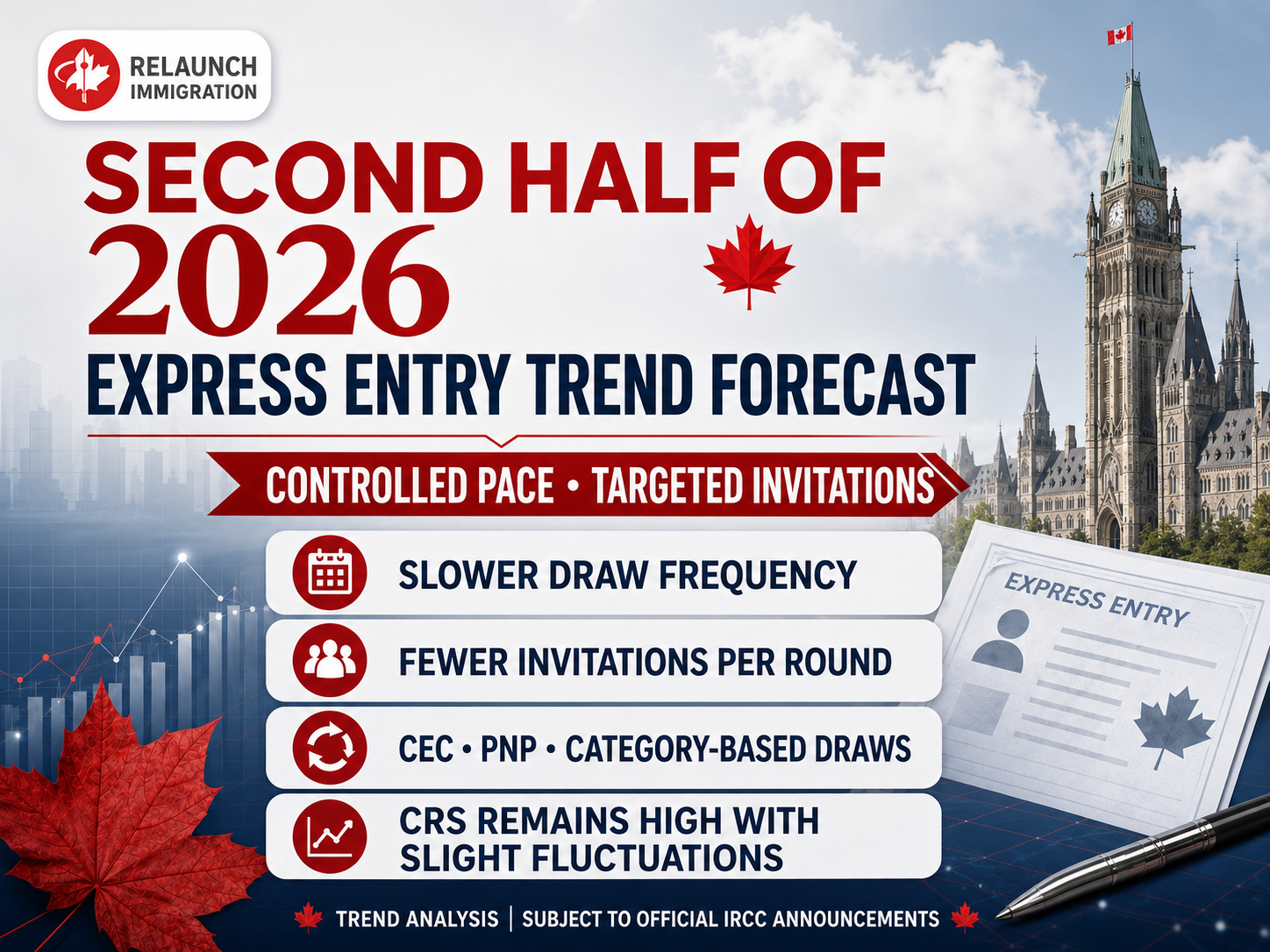
Therefore, for the second half of 2026, the more likely scenario is not a "cessation of draws," but rather a shift towards a more precise and controlled mode. Here are the main trend predictions:
- ✅ Slower draw frequency
- ✅ Reduced number of invitations per round
- ✅ CEC, PNP, and category-based draws to alternate
- ✅ CRS scores likely to remain high with slight fluctuations
II. Invitation Trend Predictions by Category
🇫🇷 French Language Proficiency
French language proficiency will continue to be a key category for IRCC. We anticipate another 1 to 2 larger invitation rounds in H2 2026, with CRS scores potentially ranging from approximately 390–430 points. This remains a significant opportunity for applicants with strong French language skills.
🇨🇦 CEC Canadian Experience Class
The Canadian Experience Class (CEC) is expected to continue with draws, but the number of invitations per round may decrease, and the intervals between draws could lengthen. CRS scores are projected to remain high, around 505–518 points. CEC applicants should stay vigilant and ensure their eligibility is maintained.
📍 Provincial Nominee Program (PNP)
The Provincial Nominee Program (PNP) is highly likely to maintain small-scale monthly draws. While the number of invitations won't be high, applicants contributing to specific provinces still have a chance. CRS scores for this category typically remain above 700 points, highlighting the added value of provincial nominations.
👩⚕️👷 Healthcare, Trades, and Other Category-Based Occupations
Draws for healthcare, trades, and other specific category-based occupations are expected to occur intermittently. Applicants who meet the specified NOC (National Occupational Classification) and possess relevant work experience may still receive invitations with relatively lower CRS scores, reflecting Canada's demand-driven labor market.
III. Overall Outlook and Important Notes
Overall, Express Entry in the second half of 2026 is more likely to enter a "controlled pace, precise invitations" mode, rather than experiencing the intensive, large-scale draws seen in the past. This means applicants will need to plan their immigration strategies more precisely and stay informed about IRCC's latest updates.
Conclusion: Precise Invitations, Prudent Planning
Relaunch Immigration reminds you that the above trend analysis is based on existing invitation patterns and quota progress, intended to provide a directional reference. Actual invitation dates, number of invitations, and CRS scores are subject to formal announcements by Immigration, Refugees and Citizenship Canada (IRCC). In the face of evolving immigration policies, obtaining timely professional information and personalized advice is crucial. If you have questions about your Express Entry application or wish to assess how to stand out in the new trends of H2 2026, we welcome you to book a professional consultation with Relaunch Immigration.